
Look before you brush
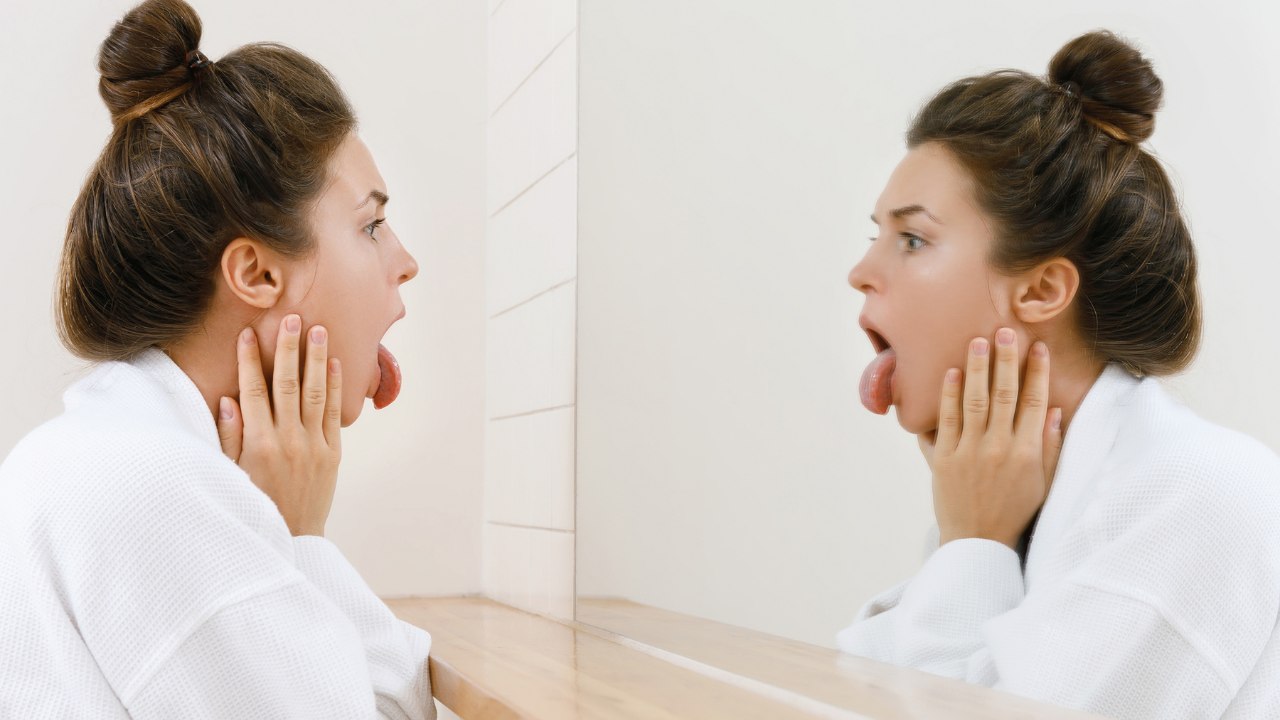
There's a moment, every morning, when your body hands you a report card. Most of us brush past it — literally — and reach for the toothpaste before the data has even registered.
That report card is your tongue. And once you know how to read it, you will never look at it the same way again.
Symptoms are signs worth listening to...
When you experience that familiar afternoon slump, persistent bloating after meals, a stubborn skin flare-up, or a fog that won't quite lift — the instinct is to silence the symptom as fast as possible. And yes, symptoms are often genuinely inconvenient. Nobody has time to be tired, or bloated, or foggy. The temptation to push through and get on with it is completely understandable.
But sweeping them under the rug is exactly what functional medicine cautions against.
These experiences are your body's sophisticated dashboard warning lights — signs of underlying imbalances, whether that's systemic inflammation, hormonal shifts, or gut dysbiosis — that deserve a root-cause investigation rather than a quick mute.[1]
Ignore the warning light long enough and a whisper has a way of becoming a shout.
"Don't just silence the signal(s). Ask what underlying imbalance is trying to get your attention."
The tongue is one of the most immediate, and readily accessible places to start paying attention.
I'm priming your R.A.S. - Check out your tongue!
In my last post, you'll recall I mentioned the R.A.S. (Reticular Activating System) — your brain's built-in biological filter. Remember the white car effect? Once you decide to buy a white car, they appear everywhere, not because more white cars appeared, but because your brain has been told what to notice.
That's exactly what I'm doing here: priming your RAS to catch the subtle signals your body sends every single morning, beginning with what's right there on your tongue.
What your tongue is actually telling you
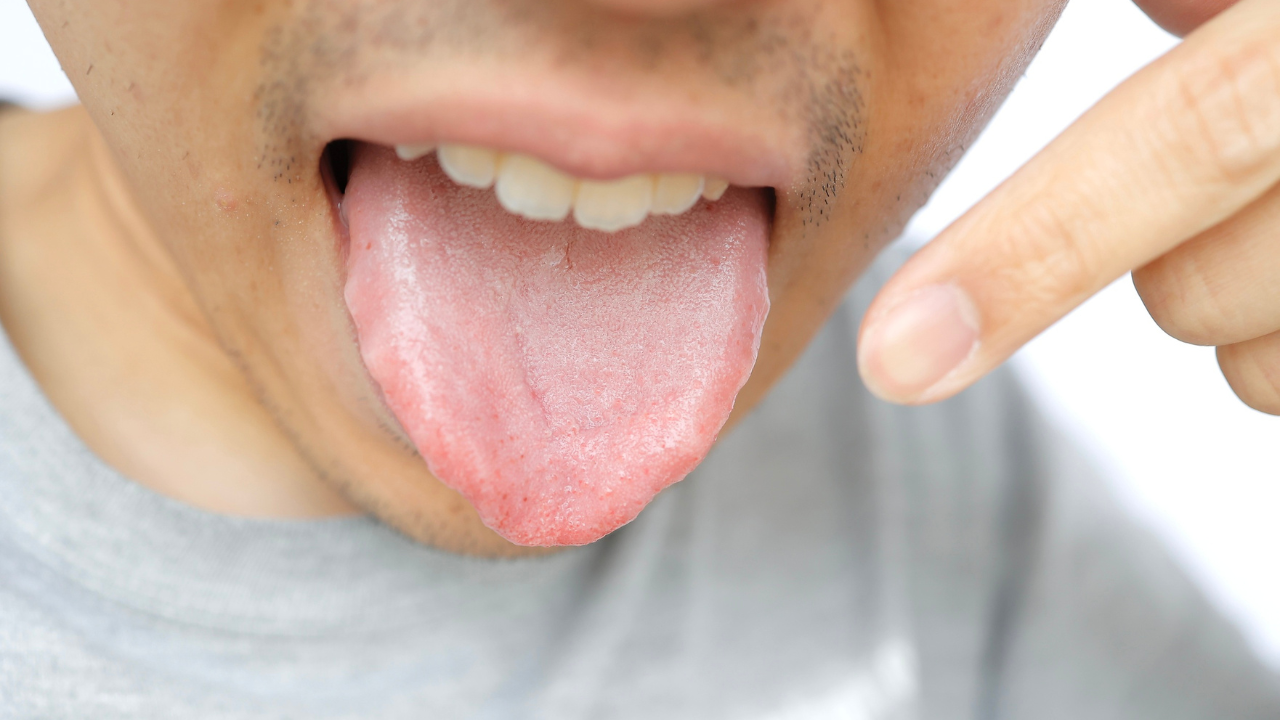
The tongue is a direct reflection of your internal terrain.
A quick caveat before we go further: nothing on this list is a diagnosis. I'm not suggesting you stare at your tongue and conclude you have Candida overgrowth or a B12 deficiency. But, what I am suggesting is that these observations become useful pieces of context — the kind that add fuel to a suspicion you might already have.
If you've been dragging yourself through the afternoons and your tongue shows up scalloped and pale, that's worth noting. It's one more data point that might prompt a conversation with your practitioner about sufficient hydration, iron or B vitamins, or nudge you to look more closely at what your body is — or isn't — absorbing.
Think of it less like reading a diagnosis and more like listening to a whisper before it becomes a shout.
And here's something that makes this particularly interesting: your tongue changes. Day to day, even hour to hour, it shifts in response to what you've eaten, how you've slept, how stressed you've been, and what's happening in your gut. That's precisely why it's worth making a daily habit of looking — a quick check each morning gives you a dynamic, evolving picture of your internal terrain rather than a single snapshot.
A quick note about how to use this information:
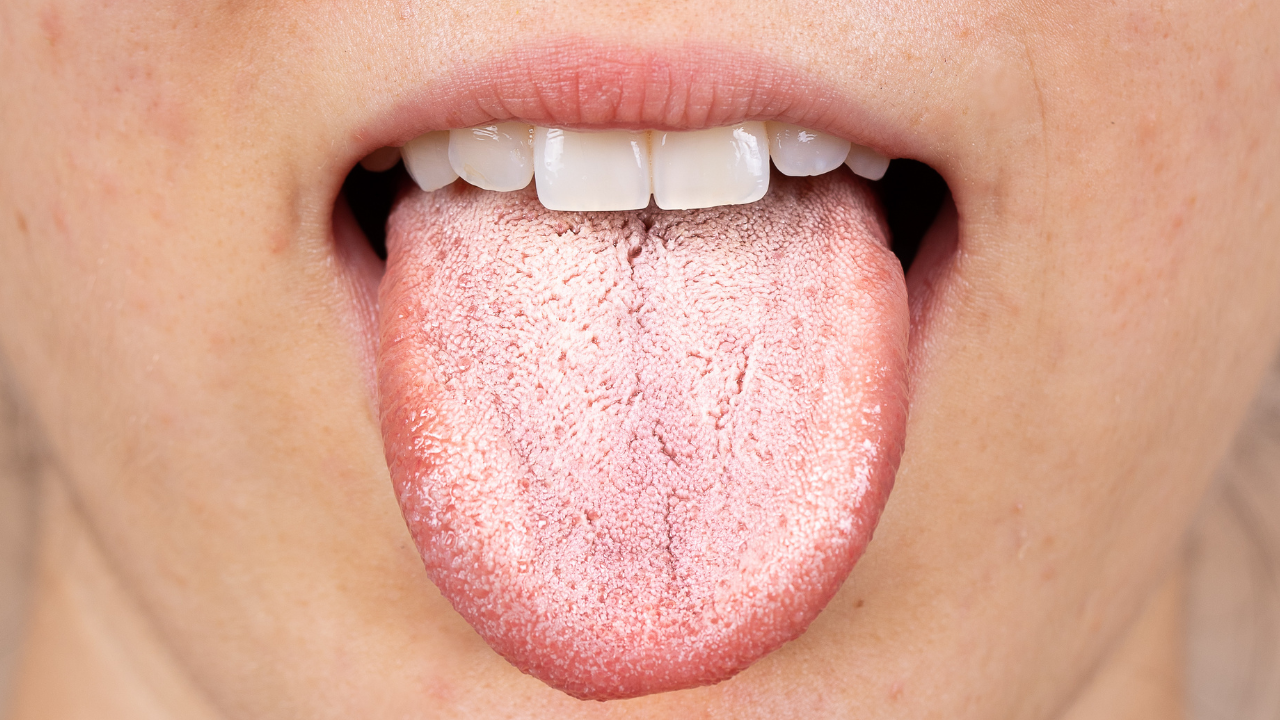
The tongue observations below are clues, not conclusions.
They're most useful when they align with other symptoms you're already experiencing — fatigue, digestive changes, brain fog, recurring infections. Patterns across multiple signals are what make something worth investigating further, ideally with the support of a practitioner who can run appropriate labs and look at the full picture.
- Coating: Thick, heavy white coat may suggest Candida overgrowth and a gut microbiome out of balance — worth exploring if you're also experiencing bloating or fatigue.[2]
-
Color: Pale red with a thin coat is healthy. Very pale may hint at deficiency; overly red with yellow coating can point toward inflammation — especially meaningful if you're already feeling run-down.
- Scalloping: Wavy, indented edges can be a clue about fluid status, B-vitamin or iron deficiency, or systemic inflammation — a useful nudge to look deeper if low energy is already on your radar.[3,4]
-
Geographic patches: Map-like smooth red patches may suggest gaps in zinc, iron, or vitamin B12 — particularly interesting if you're already noticing poor wound healing or mood changes.[5]
Try it, and have fun with it:
Get into the habit of checking your own tongue daily — ideally first thing in the morning, before eating or drinking anything.
Then rope in your partner, your housemate, a willing friend. You'll be surprised how different tongues can look from one person to the next, and how much can shift even from one day to the next in the same person.
I still have very vivid memories of one of my first "know your body signs" classes with IFM — the Institute for Functional Medicine — where we were put into small groups of 4 - 5 and asked to stick our tongues out for examination and evaluation, right there in front of each other!
Mildly mortifying in theory, but genuinely eye-opening in practice — and honestly, a lot of fun.

The case for tongue scraping:
Tongue scraping — an ancient Ayurvedic practice — turns out to be, in the words of dentist Dr. Burhenne, "the unsung hero of oral health." The benefits go well beyond fresh breath:[6]
- It enhances flavor. Removing the built-up coating exposes your taste buds, allowing you to actually taste your food more completely.
- It supports digestive health. Reducing the bacterial load at the source prevents toxins from being reabsorbed and promotes saliva production, which kickstarts digestion.
- It protects your teeth and immunity. It lowers the bacteria responsible for plaque and tooth decay, while supporting the body's very first line of defense.
- It eliminates bad breath at the source. Brushing your teeth doesn't reach the back of the tongue — that's where the real culprits live.

How I fell out of the habit...and then re-started
A few years ago, I gave everyone in our girls' walking group a tongue scraper as their gift exchange present (yes, within the $20 limit — and yes, the reactions were priceless!).
I started using mine every morning, felt genuinely smug about it, and then — about a month in — quietly stopped.
Here's the thing: thanks to my training with Dr. BJ Fogg — the Stanford behavioral scientist widely regarded as the father of behavior design — analyzing why a habit breaks is now second nature to me. So I knew exactly what had happened the moment I reflected on it.
My tongue scraper was stored separately from my toothbrush.
That's it.
That was the entire problem. That's why I stopped doing it!
According to Dr. Fogg's behavioral model,[7] a habit forms most reliably when it's anchored to an existing routine — what he calls an "anchor action."
Without that anchor, even a habit you're genuinely motivated to keep will quietly drift. Motivation wasn't my issue. Proximity was.
So I moved my tongue scraper to live directly alongside my toothbrush. Now it's the first thing I reach for every morning, before I even think about it. And there is something deeply satisfying — almost viscerally so — about watching what scrapes off and knowing you've just given your oral and gut health a head start on the day.
The habit design fix took thirty seconds. The habit itself now takes about ten seconds.
Your body is talking — are you listening?
A white coating, a scalloped edge, a map of red patches — these aren't diagnoses. They're breadcrumbs. Whispers before the shout. And your tongue is laying them out for you every single morning, right there in the mirror, before you've even had coffee.
The goal isn't to become your own clinician. It's to become a better witness to your own body — so that when something does feel off, you arrive at that practitioner's appointment with richer, more specific information than "I've just been really tired lately."
Start tomorrow morning.
Look, notice, and if you can, compare notes with someone nearby.
What is your tongue trying to tell you today? I'd love to hear what you start noticing.
TL:DR:
- Symptoms are signs worth listening to: They're often inconvenient, yes — but they're also your body's warning lights. Sweeping them aside is how a whisper becomes a shout.
- Your tongue changes daily: That's what makes it so useful. A morning check gives you a dynamic, evolving picture — not a fixed snapshot — of your internal terrain.
- Clues, not conclusions: A thick white coating, scalloped edges, or geographic patches are most meaningful when they align with symptoms you're already experiencing. One signal plus another signal equals a pattern worth investigating.
- Scraping works: It removes bacteria, eliminates bad breath at the source, and enhances flavor — dentist Dr. Mark Burhenne calls it the most overlooked oral health practice around.
- Anchor your habit: Using Dr. BJ Fogg's behavior design framework, placing your scraper next to your toothbrush is all it takes. Motivation isn't the obstacle — proximity is.
- Have fun with it: Check your partner's tongue. Compare notes. Your kitchen can be your own functional medicine classroom.
References:
[1] Cleveland Clinic. (2025). Scalloped tongue: Symptoms, causes & treatment.
[2] Cleveland Clinic. (2024). Geographic tongue: Causes, symptoms & treatment.
[3] Medical News Today. (2017). Scalloped tongue: Causes, symptoms, and treatment.
[4] Manhattan Medical Arts. (2024). Understanding scalloped tongue: A guide to oral health.
[5] Khayamzadeh, M., et al. (2019). Determining salivary and serum levels of iron, zinc and vitamin B12 in patients with geographic tongue.
[6] Burhenne, M. (2024). 6 Reasons to Scrape Your Tongue. Ask the Dentist. askthedenist.com
[7] Fogg, B.J. (2020). Tiny Habits: The Small Changes That Change Everything. Houghton Mifflin Harcourt.
